
Homeowner guide
Grading in Montreal: how to prepare ground that stops moving
Grading corrects slopes, removes unstable soil and creates a solid base before pavers, lawn, concrete or landscaping. A typical residential yard takes 1 to 5 working days depending on area and how much imported material is needed.
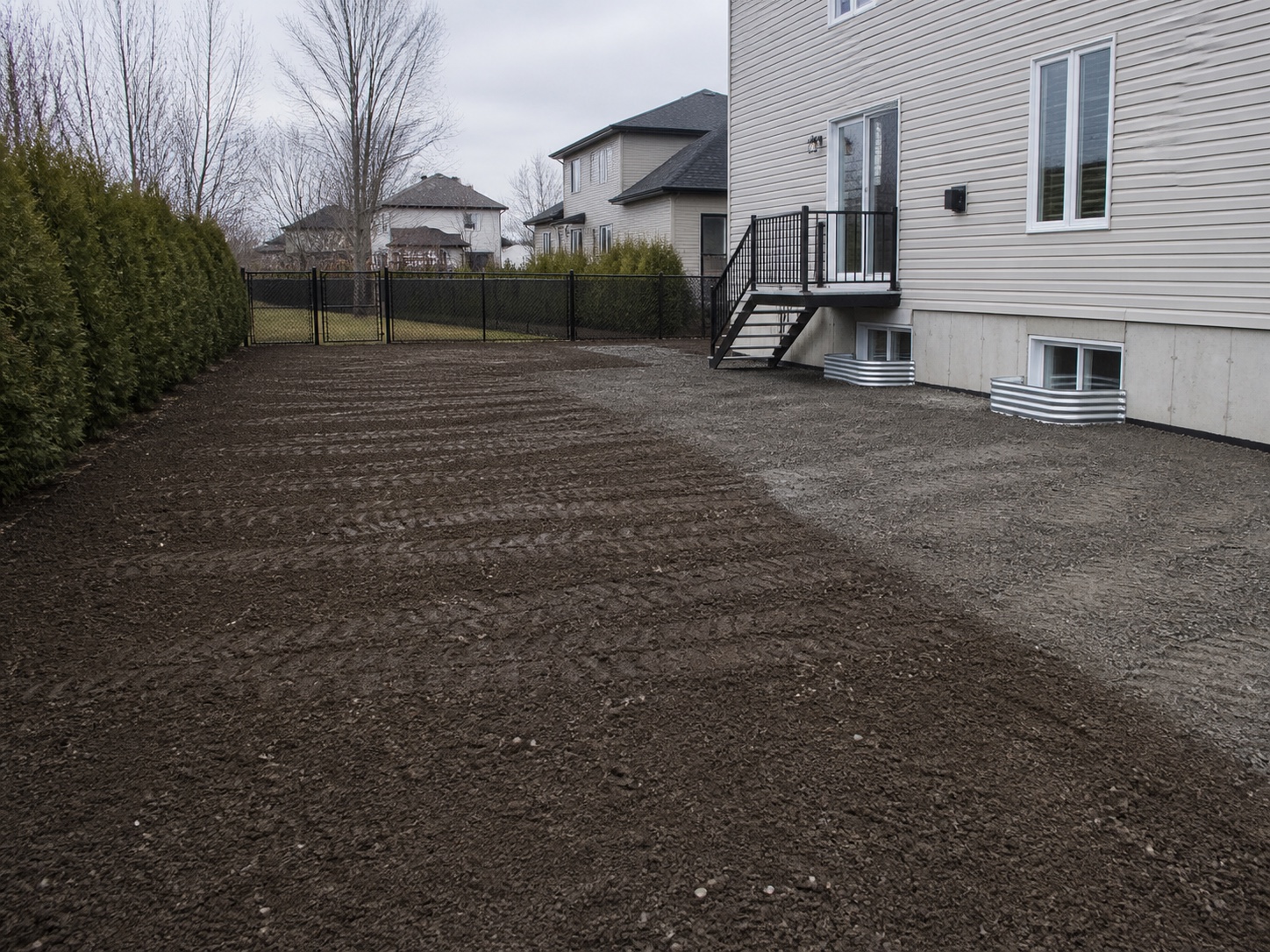
When you need it
The signs to watch for
- Water pools on your lot after rain
- Grass won't grow in certain spots (dead or over-compacted soil)
- A slab or paver area that cracks or sinks
- You are prepping a new project: interlock, slab, lawn, parking, landscaping
- Soil near the house freezes, thaws and shifts every winter
How we work
Step by step
- 01We read the existing slope, low points, water outlets and constraints around the lot.
- 02We remove unstable, organic or contaminated material that would stop the base from holding.
- 03We shape the ground with positive slope away from buildings.
- 04We add the proper base material (MG-20, sand, screenings) in controlled layers.
- 05We compact each layer and adjust levels with a laser before finishing.
- 06We validate surface drainage and clean the edges of the work area.
Cost and time
What affects price and timeline
Every job is different. Here are the concrete factors that move the estimate up or down. The fast quote tool accounts for these points.
What affects the price
- Area to grade (a corner for a shed vs a full backyard)
- Soil type uncovered (loose soil vs clay vs contaminated soil to haul away)
- Volume of base material to import (MG-20, sand, screenings)
- Final use — lawn does not need the same base as an interlock parking pad
- Equipment and material truck access
What affects the timeline
- 1 to 2 days for a standard residential yard
- 3 to 5 days if soil must be heavily imported or access is limited
- Season: April to November — frozen ground prevents compaction
- Add 1 day if waiting on material delivery
Your side
What you prepare for us
- Photos after rain showing where water pools
- Mention areas where the soil sinks, shifts or freezes poorly
- Confirm the desired finish: lawn, slab, pavers, parking or landscaping
Our rules
What we will never do
- Compact over organic or contaminated soil
- Skip compaction — the slab cracks within 2 years
- Direct water toward the foundation instead of away
- Eyeball levels without a laser check
The result
What you end up with
- Graded yard with positive slope sending water away from the building
- Compacted base in layers, ready for lawn, slab, pavers or landscaping
- Surface drainage validated with clear runoff
- Site cleaned and ready for the next step
Frequent questions
Your answers
What base material goes under interlock pavers?
For residential pavers, we typically use 4 to 6 inches of compacted MG-20 followed by a setting bed of bedding sand. For a parking pad with heavier vehicles, we go to 8 inches. Exact spec depends on the native soil and use.
How long before the soil is stable after grading?
Properly compacted soil is ready immediately for the next step. If we wait through winter, we re-check compaction in spring because freeze-thaw can create movement.
Why did my previous grading shift?
Three common causes: insufficient compaction at the start, drainage funnelling too much water to one spot, or organic matter left below the base that rotted over time. We identify which one applies and fix it.
Do I need a permit to grade my lot?
For simple residential grading, usually no. If we change the slope toward a neighbour or street, or if the change exceeds municipal thresholds, yes. We check with your borough.
Does grading fix basement water problems?
Partly — good grading with positive slope moves water away from the foundation. But if water already enters the basement, the French drain around the foundation needs checking too. Our Complete option covers both.
What warranty on grading?
Guaranteed against execution defects (compaction, levels, surface drainage). Natural ground movement from freeze-thaw is not covered, but we pick materials to minimize it. RBQ 5825-9060-01.
See also
Other A1 methods
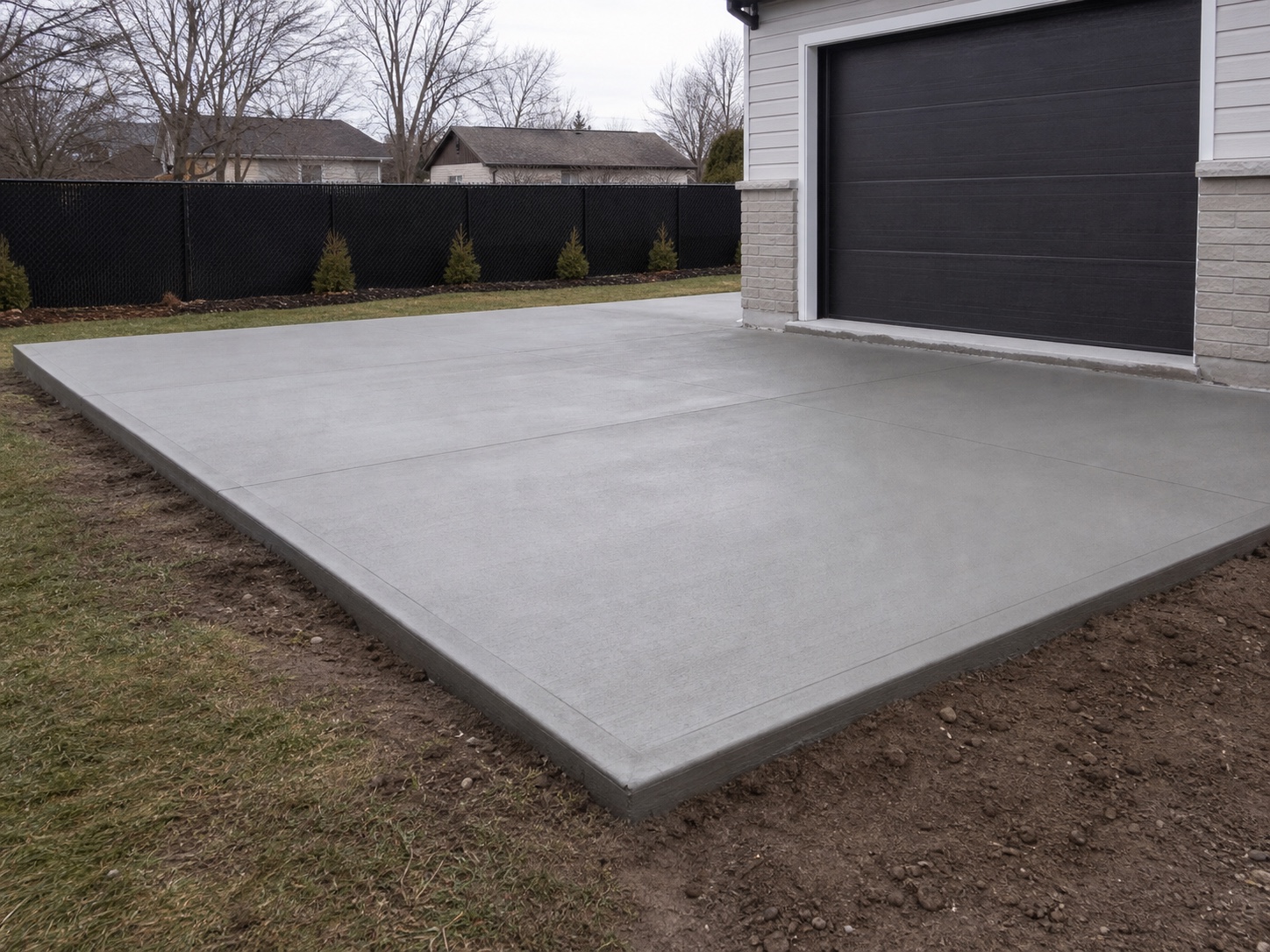
Concrete slab
An early-cracking slab almost always has a base problem, not a concrete problem. A standard residential pour is 1 to 2 days plus 7 days curing before walking and 28 days before heavy vehicles. Done right, a Quebec slab lasts 30 years or more.
Read the guide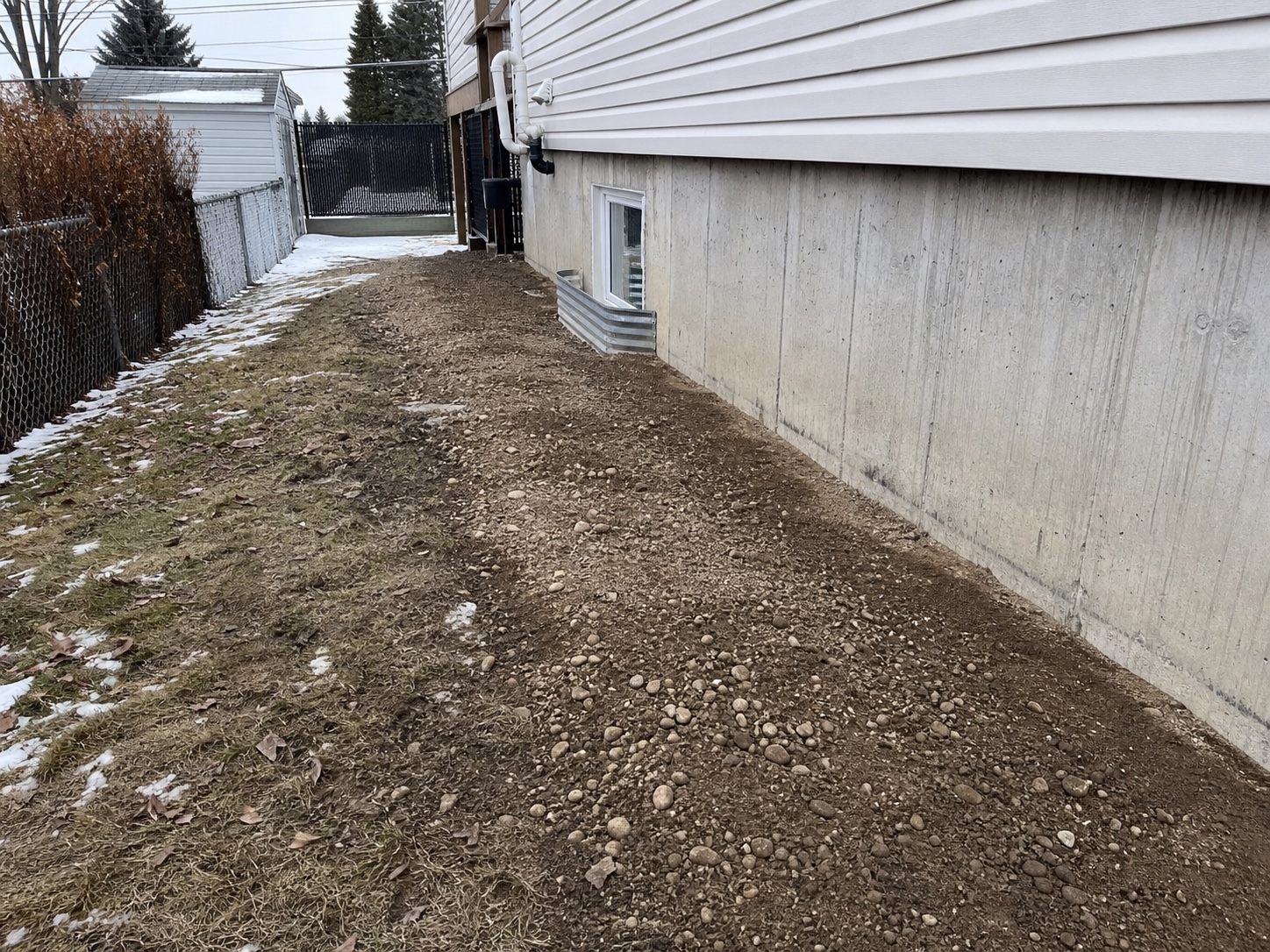
French drain
If you see humidity, cracks or white stains on your basement walls, the French drain around your foundation has probably stopped draining water properly. Replacing it usually takes 3 to 7 working days, depending on yard access.
Read the guideYour next step