
Homeowner guide
Concrete slab in Montreal: how to avoid cracks in the first year
An early-cracking slab almost always has a base problem, not a concrete problem. A standard residential pour is 1 to 2 days plus 7 days curing before walking and 28 days before heavy vehicles. Done right, a Quebec slab lasts 30 years or more.
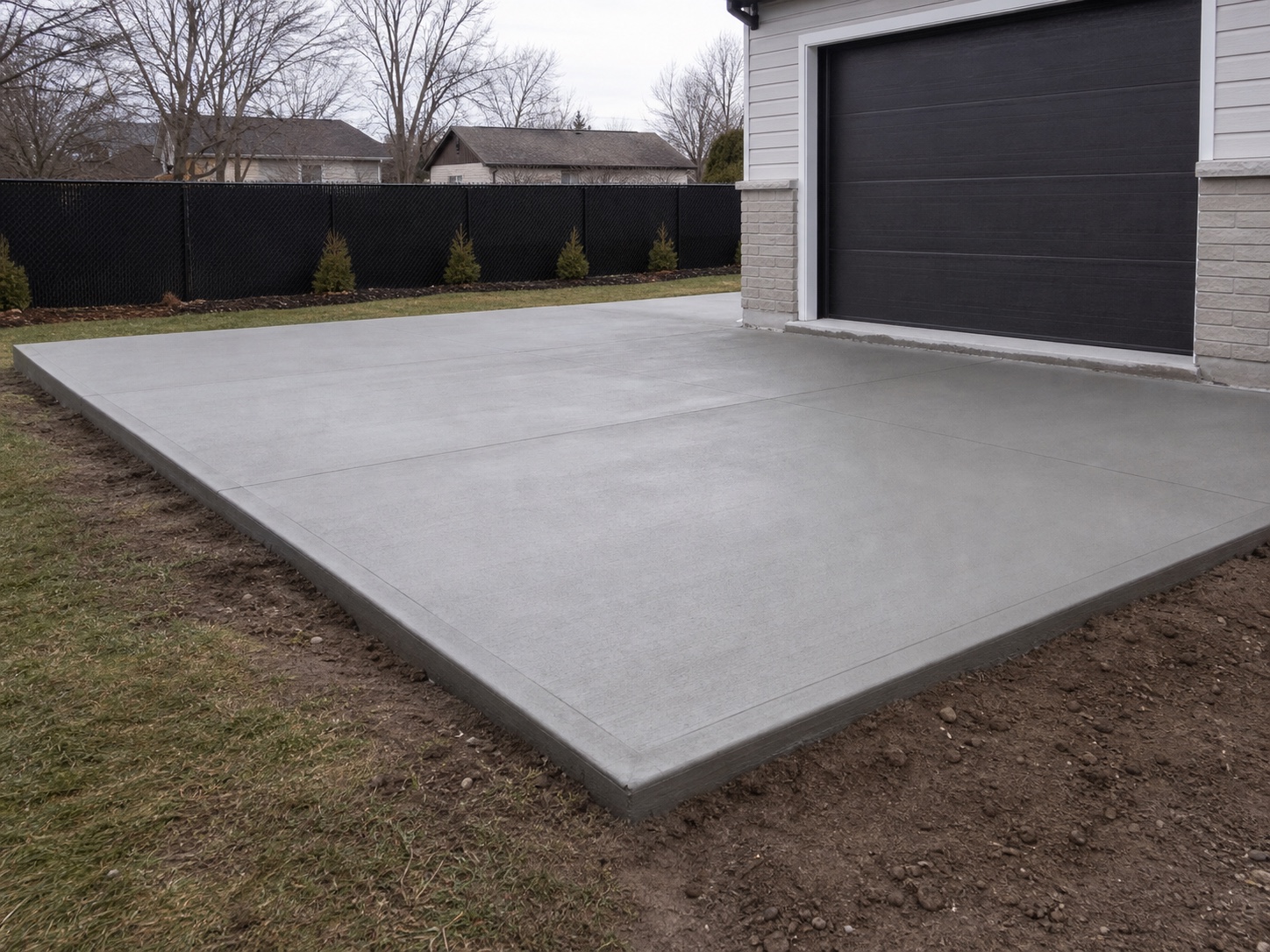
When you need it
The signs to watch for
- You are building a shed, garage, carport or patio
- Your current parking slab is cracked or sinking
- You are redoing a concrete driveway
- You are planning a basement slab after perimeter excavation
- You want to replace an aged concrete balcony, walkway or stairs
How we work
Step by step
- 01We confirm exact slab use: parking, shed, patio, driveway, walkway or utility surface.
- 02We excavate and remove weak materials until the base is stable.
- 03We install crushed stone, level it and compact the base based on thickness and use.
- 04We set forms with the planned slopes, dimensions, control joints and reinforcement (mesh or rebar).
- 05We coordinate the pour, placement, finishing and control joints in the right time windows.
- 06We protect the slab during curing (7 days minimum) and hand over use timelines in writing.
Cost and time
What affects price and timeline
Every job is different. Here are the concrete factors that move the estimate up or down. The fast quote tool accounts for these points.
What affects the price
- Slab thickness (4 in for a light patio vs 6-8 in for parking)
- Surface in square feet
- Current base condition — loose soil means more stone to import
- Chosen reinforcement (standard mesh vs rebar for heavy loads)
- Finish type (smooth, comb, broom or decorative)
What affects the timeline
- 1 to 2 days for prep and pour on a standard residential slab
- 7 days curing before pedestrian traffic
- 28 days before heavy vehicles (an SUV at day 14 is usually acceptable depending on thickness)
- Season: May to October — concrete does not pour in freezing weather without special precautions
Your side
What you prepare for us
- Confirm exact dimensions and slab use
- Indicate where water should drain
- Keep the area clear on pour day
Our rules
What we will never do
- Pour without reinforcement (mesh or rebar) on an outdoor slab
- Skip control joints — the slab will crack in a cross pattern for sure
- Pour below 5 °C without heating and insulated covers
- Allow walking or vehicles before curing is complete
The result
What you end up with
- Flat concrete slab, no dips or bumps, at the approved dimensions
- Control joints placed in the right spots to absorb movement
- Uniform finish matched to the use (non-slip for patio, smooth for shed)
- Curing and use-delay instructions handed over in writing
Frequent questions
Your answers
Why do concrete slabs crack?
Three main causes: poorly compacted base, missing control joints, or pouring in conditions too cold or too hot. A surface hairline crack in year one is often normal (natural cure); a structural crack is an execution problem.
What thickness do I need?
Pedestrian patio: 4 in. Shed or carport: 5 in. Residential parking: 5-6 in with mesh or rebar. Commercial parking or RV pad: 6-8 in with rebar. Exact thickness also depends on soil and use.
How long before I can use my new slab?
Pedestrian: 24-48 hours. Cyclists or light furniture: 3-5 days. Standard car: 7-10 days. Truck or RV: 28 days. We hand over exact timelines based on thickness and weather.
Do I need a drain under the slab?
For an outdoor slab, usually no — surface slope drains the water. For an indoor basement slab or a garage with a floor drain, yes, and the drain must be planned before the base is laid.
Can concrete be poured in winter in Quebec?
Technically yes, with heating and insulated covers, but cost climbs and so do the risks. We recommend May to October. For an urgent winter project, we evaluate case by case.
What is the warranty on an A1 slab?
Guaranteed against execution defects (structural cracks, settlement). Duration depends on the chosen tier and is stated in the quote. Natural shrinkage cracks are not covered but are normal. RBQ 5825-9060-01.
See also
Other A1 methods
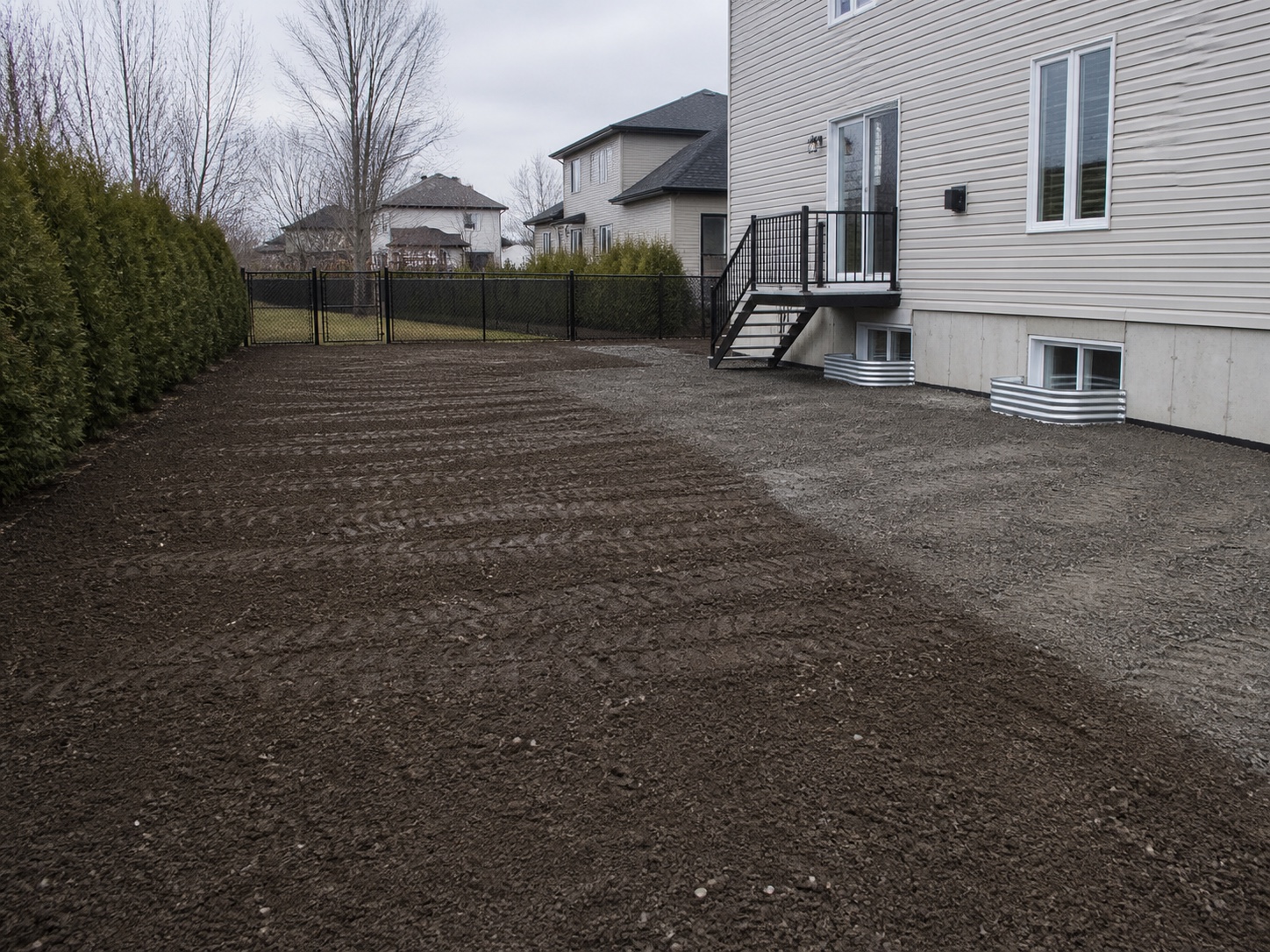
Grading
Grading corrects slopes, removes unstable soil and creates a solid base before pavers, lawn, concrete or landscaping. A typical residential yard takes 1 to 5 working days depending on area and how much imported material is needed.
Read the guide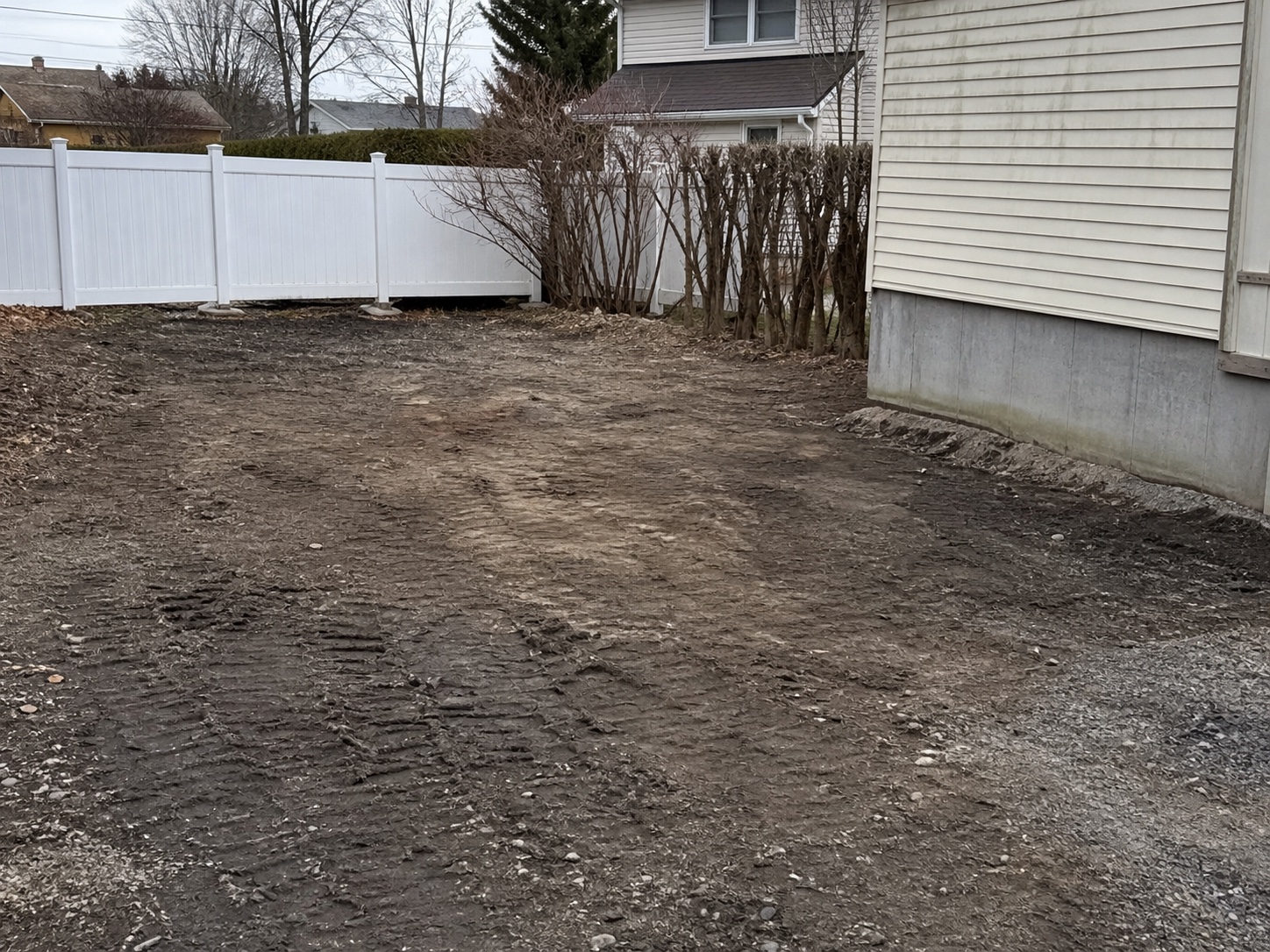
Concrete demolition
A residential demolition usually takes 1 to 3 days. We cut, break in controlled sections, load and haul out — without damaging what should stay or cracking nearby structures.
Read the guideYour next step